International

Global perspectives on international higher education, including mobility, partnerships, and cross-border collaboration.

US moves closer to ending open-ended F-1 student status with four-year visa limit rule

· By H. Yang

The US is nearing implementation of a rule requiring international students on F-1 visas to renew status after four years, potentially increasing costs, uncertainty, and administrative burdens.

Finland proposes stricter student finance rules

· By H. Yang

Finland plans to tighten international student residence permit rules, making social assistance use an explicit basis for permit cancellation while introducing stricter income, family, and language requirements.

New Zealand student visas 2022–2025: from recovery to recalibration in global student mobility

· By H. Yang

New Zealand’s offshore student visa data (2022–2025) shows a cycle of recovery, rapid growth, peak demand in 2024, and recalibration in 2025. While volumes fluctuated, approval rates stabilised again, revealing a more selective and regionally differentiated global student mobility system.

France redefines international tuition: a strategic shift with global implications

· By H. Yang

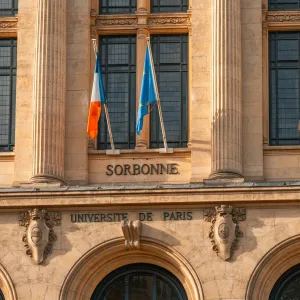
France is raising tuition fees for non-EU students to €2,895 (bachelor’s) and €3,941 (master’s). Despite the increase, it remains cheaper than major study destinations like the US and UK. The change supports France’s “Choose France” strategy to attract talent in key fields like AI and engineering.

Hong Kong students increasingly stay local as overseas study falls to 14-year low

· By H. Yang

Only 2,671 Hong Kong Secondary 6 graduates studied outside the city in 2025, the lowest level since 2012. Most students stayed in Hong Kong for higher education, supported by strong local universities, subsidized tuition, diversified study options, and changing student demographics, with mainland China now the top external study destination.

China’s study abroad curve: from expansion to equilibrium under structural pressure

· By H. Yang

China’s study abroad is shifting from growth to stability. In 2025, outbound students (570,600) stay below the 2019 peak. Drivers include mass domestic higher education (9.922 million admissions), improving university quality, weaker ROI, rising costs, geopolitical friction, and declining demographic pressure expected after the 2034 Gaokao peak.

India’s higher education internationalisation: A new era of opportunities for global institutions

· By H. Yang

India's higher education sector is embracing global collaboration, with top UK universities like Southampton, Liverpool, York, and Aberdeen, alongside Australian institutions like UNSW, Deakin, and Wollongong, setting up campuses. This aligns with NEP 2020, offering Indian students access to world-class education while strengthening international partnerships.

Education cooperation in a fragmenting geopolitical order

· By H. Yang

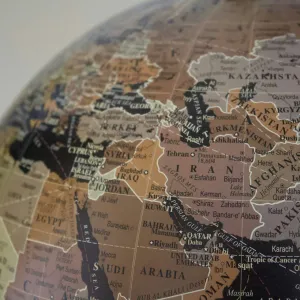
International education is entering a more fragmented and politically conditioned era, where cooperation is increasingly shaped by geopolitical rivalry, regional conflicts, and the securitization of domestic higher education systems. The U.S.–China strategic competition, the Russia–Ukraine war, and instability in the Middle East are reshaping global academic networks, while U.S. domestic policies are tightening visa regimes and expanding research security frameworks. Together, these forces are transforming international education from an open system of exchange into a more managed, selective, and risk-sensitive global architecture.

UK unveils Malaysia handbook to streamline transnational education partnerships

· By H. Yang

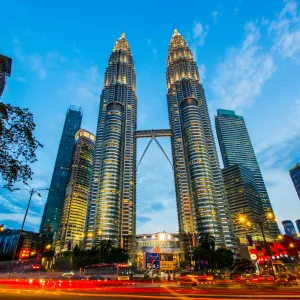
The UK launches a new handbook on April 22, 2026, to help universities establish transnational education programs in Malaysia, offering step-by-step guidance on accreditation and regulation as both countries deepen collaboration and position Malaysia as a regional education hub.

Indonesia deepens US ties to power science-driven growth

· By Eleanor Shaw

Indonesia is strengthening higher education ties with the US following talks on 16 April, focusing on dual degrees, research collaboration and skills development in key sectors such as semiconductors and healthcare, as part of a broader push to boost global competitiveness and drive a technology-led economy.