America’s leading research universities are reporting a sharp slowdown in doctoral admissions and research activity as uncertainty over federal research funding, policy changes, and global competition for talent reshape the country’s higher education landscape.
New data from the Association of American Universities Data Exchange (AAUDE) show that 55 major U.S. research universities accepted 15% fewer applicants to doctoral programmes for fall 2026 compared with the previous year. International applications to PhD programmes fell by 21%, even as domestic applications increased by 3%.
The decline reflects growing concerns that the United States’ long-established model of research-based doctoral education is facing pressure. Unlike many taught degree programmes, PhD education in the U.S. is closely connected with university research. Doctoral students often work alongside faculty members on federally funded projects while developing as future scientists, engineers, and scholars.
According to AAU, uncertainty around federal research support has made some universities more cautious about admitting new doctoral students, particularly in STEM fields where students are commonly supported through research grants.
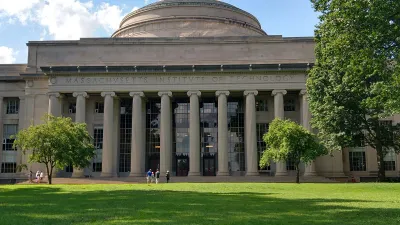
The Massachusetts Institute of Technology (MIT) has also highlighted similar challenges. MIT President Sally Kornbluth said the university’s research enterprise had declined by around 10% compared with a year earlier. She said graduate admissions for the 2026–27 academic year were down approximately 20%, pointing to the combined effects of federal funding pressures, higher taxes on large university endowments, and immigration policy changes that have affected international student interest.
The situation illustrates the close relationship between research funding and graduate education in the U.S. system. Federal research grants do not only finance scientific projects; they also help train the next generation of researchers. When future funding becomes uncertain, universities may reduce admissions because accepting a PhD student usually represents a multi-year commitment.
Some universities have reportedly paused admissions in selected doctoral programmes or reduced cohort sizes, including in strategically important areas such as artificial intelligence, quantum technologies, and advanced engineering.
The impact could extend beyond universities. A smaller doctoral pipeline may affect the future supply of researchers, university faculty members, and highly skilled professionals needed in science and technology industries.
At the same time, international competition for research talent is increasing. Countries outside the United States are expanding efforts to attract scientists, researchers, and graduate students, creating new options for globally mobile talent.
For decades, U.S. universities benefited from a combination of strong federal investment, world-leading research infrastructure, and the ability to attract international students. The current challenges raise broader questions about how countries can maintain scientific leadership in an increasingly competitive global environment.
While the long-term impact remains uncertain, universities argue that rebuilding research capacity and doctoral training systems can take years. Decisions made today about research investment, immigration, and talent development may influence the future global balance of innovation.
- Log in to post comments